
De 15 a 21 de fevereiro de 2016
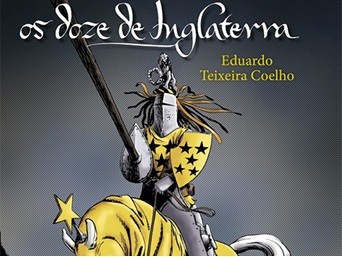
«Os Doze de Inglaterra» de Eduardo Teixeira Coelho (Gradiva, 2015), que acaba de ser publicado com a inexcedível qualidade do apoio técnico e artístico de José Ruy, é uma merecida homenagem ao mais internacional dos desenhadores portugueses de Banda Desenhada, quando se celebram os 80 anos de «O Mosquito».
UMA OBRA-PRIMA ATÉ AQUI SEM ALBUM
Eduardo Teixeira Coelho, ETC (1919-2005) é uma referência na história europeia e mundial da BD, como é reconhecido pelos maiores especialistas. Começou a colaborar no «Sempre Fixe», com apenas 17 anos e a partir de 1943 vem-lo nas páginas de «O Mosquito», ao lado do argumentista Raul Correia. Aí assina «Os Guerreiros do Lago» (1945); «Os Náufragos do Barco sem Nome» (1946); «Falcão Negro» (1946-49); «O Caminho do Oriente» (1946-48); «Sigurd, o Herói (1946); «A Lei da Selva» (1948); «Lobo Cinzento» (1948-49); «A Torre de D. Ramires» (adaptação de Eça de Queiroz, a que se seguirão outras); «O Defunto» (1950); «O Suave Milagre»; «Os Doze de Inglaterra» (1950-51» e «A Ásia» (1952). O «Cavaleiro Andante» foi também beneficiário de belas mas esporádicas ilustrações de ETC. Com a interrupção da saída de «O Mosquito» (1953), Coelho decide emigrar para França, onde usa o pseudónimo Martin Sièvre e colabora no semanário «Vaillant» (e depois em outros, como «Pif Gadget») até 1970, com «Ragnar, o Viking»; «Till Ulenspiegel»; «Davy Crockett»; «Wango»; «Yves, le Loup»; «Robin du Bois»; «Le Furet»; «Ayak» e «Erik le Rouge». É este o período de maior afirmação internacional de ETC, com generalizado reconhecimento dos conhecedores e especialistas. Em Portugal, foi o «Mundo de Aventuras» que publicou em tradução algumas dessas obras. A partir de 1970 trabalhará em Itália, sendo premiado com o galardão «Yellow Kid» no festival de Lucca. Como salienta o editor Guilherme Valente, é a primeira vez que os admiradores do mestre «vão poder apreciar na íntegra uma das obras mais belas que desenhou». Pela primeira vez estas pranchas são publicadas em álbum, sem as amputações que «na sua edição original sacrificaram, frequentemente, a integralidade do desenho ao espaço ocupado pelo texto de Raul Correia (…), numa edição que só foi possível pela arte, o conhecimento e o empenho de outro grande criador da banda desenhada portuguesa, José Ruy».
UMA HISTÓRIA CAVALHEIRESCA
Estamos perante uma história de cavaleiros, passada na Europa medieval, que tem a ver com 12 damas inglesas ofendidas por doze nobres ingleses, que alegavam não ser elas dignas do nome de damas, pela vida que supostamente levavam. Perante tão ignóbil afronta, as doze damas pediram ajuda ao Duque de Lancastre, João de Gante, que tinha combatido na Península Ibérica ao lado de D. João, Mestre de Avis – tendo sido por este indicados os cavaleiros portugueses que poderiam reconquistar a honra ameaçada das donzelas. Eram eles: Álvaro Gonçalves Coutinho, o Magriço (verdadeiro herói desta série); João Fernandes Pacheco (filho de um dos matadores de Inês de Castro) e seu irmão Lopo Fernandes Pacheco; Álvaro Vaz de Almada (que seria 1º Conde de Avranches); Álvaro Mendes Cerveira; Rui Mendes Cerveira; João Pereira da Cunha Agostim (parente de Nuno Álvares); Soeiro da Costa; Luís Gonçalves Malafaia; Martim Lopes de Azevedo; Pedro Homem das Costa e Rui Gomes da Silva – constando ainda que o rei indicou ainda Vasco Anes da Costa, o Corte-Real… Cada uma das damas escreveu a cada um dos doze cavaleiros e até a D. João I, acrescendo ainda o pedido do Duque de Lancastre. Onze cavaleiros seguiram por mar, mas um deles, o Magriço, querendo demonstrar maior valentia, decidiu ir por terra para «conhecer terras e águas estranhas, várias gentes e leis e várias manhas». Quando se atingiu o dia do torneio, o Magriço não chegara, para desespero dos companheiros e da dama que coubera a Coutinho, que já antecipava a desonra. No entanto, no último momento, Álvaro Gonçalves Coutinho apareceu, na sequência de mil aventuras e glórias, e permitiu que a honra das damas fosse salva. O episódio vem relatado, como sabemos, por Fernão Veloso no Canto Sexto de «Os Lusíadas», pouco antes da chegada a Calecute, mas Eduardo Teixeira Coelho foi busca-lo a António Campos Júnior, nas suas invocações da «Ala dos Namorados» (Edições Romano Torres, de 1905), já que o «Magriço» pertencera ao grupo de destemidos e jovens cavaleiros que intervieram na Batalha de Aljubarrota – e por quem D. João I tinha especial apreço.
A SOMBRA DE H. FOSTER
Como está documentado na apresentação do álbum, a obra foi totalmente remontada e, se era já uma obra-prima, fica como uma preciosidade gráfica. Nota-se a influência de Harold Rudolf Foster (1892-1982), o célebre autor do Príncipe Valente, criador da figura em 1937. Em bom rigor, esta longa série de 112 pranchas refere-se não tanto aos «Doze de Inglaterra», mas ao mais célebre deles, o Magriço. ETC escolhe um herói, à maneira romântica e como fez H. Foster. Entre a partida de Portugal e a chegada a Inglaterra, temos um conjunto de episódios que revelam a valentia e a eficácia do Magriço, à semelhança do Príncipe Valente. Seguindo o mesmo método de Foster, Eduardo Teixeira Coelho também não utiliza os balões nesta série. Enquanto o tema de Foster corresponde ao período compreendido entre o final do Império Romano e o início da Idade Média – integrando-se no ciclo bretão, que envolve, na tradição céltica, o rei Artur, os cavaleiros da Távola Redonda, Camelot, Merlin, Tristão, Laçarote do Lago etc.. O sucesso ficou a dever-se à referência histórica e ao culto individual do sucesso e do heroísmo… Não por acaso Teixeira Coelho escolhe um tema com semelhanças, que tem a ver com o início da dinastia de Avis e com o facto de a Mãe da Ínclita Geração e dos Altos Infantes ser uma Lancastre – tendo o seu casamento com D. João I dado origem à mais antiga das alianças no mundo. «Os Doze de Inglaterra» são o pretexto para enaltecer o Magriço, como Campos Júnior também faz, mas a propósito da «Ala dos Namorados» e das suas façanhas. O que ETC aqui nos apresenta é um conjunto de façanhas do Magriço. Pode dizer-se que o mestre atinge aqui a sua maturidade, que corresponderia ao seu momento mais fecundo e de mais nítido domínio da difícil arte da BD. Há uma articulação perfeita entre o ritmo da aventura, a apresentação das imagens, que se sucedem a um ritmo cinematográfico (que o seu autor desejava), o movimento, a intensidade da identificação e a representação das personagens. Com uma personalidade estilística muito marcada, o certo é que as reminiscências de Foster constituem uma marca de qualidade indiscutível. Se a influência é percetível, o certo é que ETC cedo se liberta das amarras de um qualquer seguidismo, demonstrando a sua própria originalidade, que o torna (como no caso dos maiores artistas) um caso excecional de originalidade. Os críticos têm concordado com o facto de a maturidade de «Os Doze de Inglaterra» corresponder a uma fase de grande domínio do traço e do seu sentido dramático pelo autor, por contraste com o tempo da grande produção em França (ou em Itália), onde se nota uma maior atenção ao pormenor e menos à encenação dramática e à força do talento artístico.
Guilherme d’Oliveira Martins
Oiça aqui as minhas sugestões – Ensaio Geral, Rádio Renascença
«Ragnar, o Viking» – Senhor Guilherme de Oliveira Martins, pode ser ficção para si, mas vou deixar algo para observarem, os Filgerensis ou Felgerium ou Felgar, vieram do ano 160 da Finlândia e entramos na Saxoniae e Baviera, depois espalhamos para norte à Russia e para sul França e Inglaterra.
O Rei não precisa de inventar nada, a verdade existe, não posso fugir dela, eu sou Rei, sou.
Stephanus de Filgeriis, capellanus regis Henrici, factus est episcopus Redonensistifs à un aide qui fut levé en Angleterre à l’occasion du mariage de Mathilde avec le duc de Saxe : « Auxilium filie regis, auxilium Matilde filie regis, auxilium ad maritandam flliam regis; » Madox, ibid. p. 398 et suiv regis Henrici Anglorum, Saxonum et Baiocorum dux Henricus, gener ejus, et magnis ab eo honoratus muheribus in sua rediit.
FINLAND – COUNTY UNKNOWN
FORNJOT ‘THE WIND’King in Kvenland
BIRTH: Abt 160 in County Unknown, FinlandDEATH: Abt 210FATHER: UnknownMOTHER: Unknown
MARRIAGE: Unknown
CHILDREN: 1. Kari FORNJOTSSON – Birth: Abt 185 in County Unknown, Finland
2. Logi FORNJOTSSON – Birth: Abt 190 in County Unknown, Finland
3. Hlessey FORNJOTSSON – Birth: Abt 192 in County Unknown, Finland
4. Hler FORNJOTSSON – Birth: Abt 194 in County Unknown, Finland
Fornjót is said to be “a king” and that he “reigned over Gotland”, which we now know as Finland and Kvenland. Fornjót is said to be just “a man”. His great-grandson Old Snow and his son Thorri are said to be kings in Kvenland.
Kvenland appears only in relation to Thorri of whom it is said that “he ruled over Gothland, Kvenland, and Finland”. No mention that anyone of them had been Kvens. Hversu’s brief mention that Kvens sacrificed to Thorri indicates that Kvens are meant to be his subordinates and most probably of different nationality.
He is ancient Finland’s first and most powerful ruler. He may be the Kalev of the Kalevala Saga. He is also the subject of the Fundinn Noregr.
KARI FORNJOTSSONKing in Kvenland
BIRTH: Abt 185 in County Unknown, FinlandDEATH: UnknownFATHER: FORNJOT – King in Kvenland – Birth: Abt. 160 in County Unknown, FinlandDEATH: Abt 245
MARRIAGE: Unknown
CHILDREN: 1. Frosti KARRASSON born Abt 210 in County Unknown, Finland
The Hversu and Orkneyinga saga shows where Kári appears to be the heir to his father’s kingdoms as in the Hversu Kári’s descendants emerge also as rulers of Finland and Kvenland.
Kári is father of a son who is named Frosti (‘frost’) according to the Orkneyinga saga but named JÃkul (jokull ‘icicle, ice, glacier’) according to the Hversu. This son in turn is the father of Snaer the Old -(SnÃrr inn gamli ‘Snow the Old’).
João Felgar
continuação
FROSTI KARRASSON – King in Kvenland
BIRTH: Abt 210 in County Unknown, FinlandDEATH: UnknownFATHER: Kari FORNJOTSSON – BIRTH: Abt 210 in County Unknown, FinlandMOTHER: Unknown
MARRIAGE: Unknown
CHILDREN: 1. Jokul FROSTISSON – Birth: Abt 240 in County Unknown, Finland
2. Skjalf FROSTISSON – Birth: Abt 250 in County Unknown, Finland
JOKULL FROSTISSON King of Kvenland
BIRTH: Abt 240 in Unknown County, FinlandDEATH: UnknownFATHER: Frosti KARRASSON – BIRTH: Abt 210 in Unknown County, FinlandMOTHER: Unknown
MARRIAGE: Unknown
CHILDREN: 1. Snaer ‘Old Snow’ JOKULLSSON – Birth: Abt 275 in Unknown County, Finland
In the Flatey Book, SnÃr is son of JÃkul (Jokull ‘icicle, ice, glacier’) son of Kári.
SNAER ‘OLD SNOW’ JOKULLSSONHigh King in Kvenland
BIRTH: Abt 275 in FinlandDEATH: UnknownFATHER: Jokull FROSTISSON – BIRTH: Abt 240 in FinlandMOTHER: Unknown
MARRIAGE: Abt 301Unknown
CHILDREN: 1. Driva SNAERSDOTTIR – Birth: Abt. 302 in Finland
2. Fonn SNAERSDOTTIR – Birth: Abt. 308 in Finland
3. Mjol SNAERSDOTTIR – Birth: Abt 315 in Finland
4. Thori SNAERSSON – Birth: Abt 320 in Raumsdal, Telemark, Norway
Snow’s son in Orkneyinga saga and Hversu is Thorri ‘frozen-snow’. The Hversu also gives Snow three daughters: Fonn ‘Snowdrift’, Dra?fa ‘snowfall’, and Mjal Mjoll ‘powdered snow’. Sturlaugs saga (section 22) brings in King Snow of Finmark and his daughter Mjal who flies quickly through the air. The ‘Hversu’ also mentions in passing, when speaking of Snaer’s distant descendant Halfdan the Old, that Snaer’s life lasted three hundred years.
THORI SNAERSSONKing of Gotaland, Finland
BIRTH: Abt 320 in Raumsdal, Telemark, NorwayDEATH: UnknownFATHER: Snaer ‘Old Snow’ JOKULSSON – Birth: Abt 275 in FinlandMOTHER: Unknown
MARRIAGE: Abt. 344 – Unknown
CHILDREN: 1. Norr THORRASSON – Birth: Abt. 345 in Raumsdal, Telemark, Norway
2. Goe THORRASSON – Birth: Abt 353 in Raumsdal, Telemark, Norway
3. Gorr THORRASSON – Birth: Abt. 365 in Raumsdal, Telemark, Norway
King Thorri (‘frozen snow’), king of Götaland, Finland, and Kvenland was the son of Snær (‘Snow’) the Old, a descendant of Fornjót (ruler of Finland and Kvenland).
Thorri was father of two sons named Nór and Gór (Górr) and a daughter named Gói (‘thin snow, track-snow’).
João Felgar
continuação:
GORR THORRASSON
King of Alfeim
BIRTH: Abt. 365 in Raumsdal, Telemark, NorwayDEATH: UnknownFATHER: Thori SNAERSSON – Birth: Abt 320 Raumsdal, Telemark, NorwayMOTHER: Unknown
MARRIAGE: Abt 400 in Raumsdal, Telemark, Norway
CHILDREN: 1. Geitir ‘Geitir’ GORRSSON – Birth: Abt 405 in Raumsdal, Telemark, Norway
2. Meitir ‘Meiti’ GORRSSON – Birth: Abt 410 in Raumsdal, Telemark, Norway
3. Beitir ‘Belti’ GORRSSON – Birth: Abt 418 in Raumsdal, Telemark, Norway
4. Heytir ‘Heiti’ GORRSSON – Birth: Abt 425 in Raumsdal, Telemark, Norway
Gór’s son Heiti as the father of Sveidi (Sveiði) the father of Halfdan the Old.
Gór had four sons named Heiti, Beiti, Meitir and Geitir. Heiti and Beiti often made war against the sons of Nór Beiti the sea-king had one of his ships put on sledge runners and so passed in the ship over the snow-covered land starting from what was afterwards called Beitstad on Beitstadfjörd from Beiti’s named and passing north across Ellidæid (Elliðæið ‘Galley-neck’) to Naumu Dale (Naumudal) with his father Gór in the ship with his hand on the tiller. So, by the agreement that had been made between Nór and Gór, the land between the path of the ship and the sea became Beiti’s.
Svadi ‘Svidri’ was the son of Heiti the sea-king. Glammi and Gylfi were the sons of Geitir. Meitir the sea-king was father of two sons named Mævil and Myndil (Myndill), Myndil being father of two sons named Ekkil (Ekkill) and Skekkil (Skekkill).
HEYTIR ‘HEITI’ GORRSSON
BIRTH: Abt 425 in Raumsdal, Telemark, NorwayDEATH: FATHER: Gorr THORRASSON – Birth: Abt 365 in Raumsdal, Telemark, NorwayMOTHER: Unknown
CHILDREN: 1. Svidri ‘Svadi’ HEYTSSON – Birth: Abt 600 in Raumsdal, Telemark, Norway
There is 175 years difference between Heytir and his son Svidri.The dates are either wrong or there are some generations missing. Heiti, Gorr’s son, was father of Sveidi the sea- king, the father of Halfdan the old,the father of Ivar the Uplanders’ earl, the father of Eystein the noisy, the father of earl Rognvald the mighty and the wise in council.
SVIDRI ‘SVADI’ HEYTSSON
BIRTH: 600 in Raumsdal, Telemark, NorwayDEATH: 695FATHER: Heytir GORRSSON – Birth: Abt 565 in Raumsdal, Telemark, NorwayMOTHER: Unknown
MARRIED: Abt.649 – EYSTEINSDATTER, Asa in Raumsdal, Telemark, Norway BIRTH: Abt. 620 in Raumsdal, Telemark, Norway
CHILDREN: 1. SVIDRASSON, ‘Eystein’ Sveida (Sveithi) – The Sea King BIRTH: Abt 650 in Raumsdal, Telemark, Norway DEATH: Abt 740 – At Sea near Vestfold, Norway
NOTES: Heiti the sea-king was the father of Svadi (Svidi).
EYSTEIN’ SVEIDA (SVEITHI) SVIDRASSON – The Sea King
BIRTH: Abt 650 in Raumsdal, Telemark, NorwayDEATH: At sea near Vestfold, NorwayBURIED: Bore, Vestfold, NorwayFATHER: Svidri HEYTSSON – Birth: Abt 600 in Raumsdal, Telemark, NorwayMOTHER: Asa EYSTEINSDATTER – Birth: Abt 620 in Raumsdal, Telemark, Norway
MARRIED: 700 – ERICSDATTER, Hildi in Raumsdal, Telemark, Norway BIRTH: Abt 670 in Raumsdal, Telemark, Norway
CHILDREN: 1. SVEIDASSON, Halfdan Mildi – Abt 720 in Oppland, Norway DEATH: Abt 800
João Felgar
continuação
TITLE: KING OF RAUMARIKE & VESTFOLD
KING EYSTEIN’S DEATH
Eystein became king in Raumarike and Westfold. He was married to Hild, a daughter of Eric Agnarsson, who was king in Westfold. Agnar had no son and Eric’s father was a son of Sigtryg, king in the Vend district and died while King Halfdan Hvitbein was still alive.
HALFDAN MILDI SVEIDASSON
BIRTH: Abt 720 in Oppland, NorwayDEATH: Abt 800 in Vestfold, NorwayBURIED: Borre, Vestfold, NorwayFATHER: ‘Eystein’ Sveida (Sveithi) SVIDRASSON – Birth: Abt 650 in Raumsdal, Telemark, NorwayMOTHER: Hildi ‘Hilf’ ERICSDOTTIR – Birth: Abt 670 in Raumsdal, Telemark, Norway
FIRST MARRIAGE: Abt 745 – WARNECHIN, Imhild verch Holtum, Vestfold, Norway BIRTH: Abt 720 in Holtum, Vestfold, Norway
CHILDREN: 1. Halfdan HALFDANSSON – BIRTH: Abt 749 in Jutland, Denmark
SECOND MARRIAGE: Abt 770 – DAGSDATTER, Hilf – Oppland, Norway BIRTH: Abt 745 in Holtum, Vestfold, Norway
CHILDREN: 1. HALFDANSSON, Ivar – Abt 774 – Oppland, Norway DEATH: Abt 810
2. HALFDANSSON, Gudrod (Jagtkonge) – Abt 772 – Holtum, Vestfold, Norway
TITLE: KING OF VESTFORD
Also known as HALFDAN The Mild, The Old, The Stingy’. Halfdan succeeded his fatherKing Eystein as King of Vestfold. He gave his men as much gold as other kings fave of silver.However he starved his men in food. Halfdan had been on many viking cruises and collectedmuch property. He was a Great Warrior. He had his chief house in Vestfoldwhere he died on the sick bed and was buried at Borre under a mound. ‘By Hel’s summons, a great kingWas called away to Odin’s Thing:King Halfdan, he who dwelt of lateAt Holtar, must obey grim Fate.At Borre, in the royal mound,They laid the hero in the ground.(So says Thjodolf)
IVAR HALFDANSSON – Jarl of Oppland
BIRTH: 788 in Oppland, NorwayDEATH: Abt 810
FATHER: Halfdan Mildi SVEIDASSON – Birth: 756 in Oppland, NorwayMOTHER: Hilf DAGSDATTER – Abt 758 in Holtum, Vestfold, Norway
MARRIED: Abt 799 – EYSTEINSDATTER, Glumra (Glamra) in Oppland, Norway BIRTH: Abt 785 in Trondheim, Sor-Trondelag, Norway
CHILDREN: 1. IVARSSON, Eystein Glumra – Abt 800 in Maer, Nord-Trondelag, Norway
Eystein Glumra also called Eystein Ivarsson (born 788 in Maer), Nord Trondelag, Norway)was a petty king of Norway, the son of Ivar Halfdan
EYSTEIN GLUMRA IVARSSON – Jarl of Upland
BIRTH: Abt 800 – Maer, Nord-Trondelag, NorwayFATHER: Ivar HALFDANSSONMOTHER: EISTEINSDATTER
FIRST MARRIED: 826 – Ascrida ROGNVALDSDATTER – Countess of OpplandBIRTH: Abt 804 – Maer, Nord-Trondelag, Norway
CHILDREN: 1. Rognvald I EYSTEINSSON ‘The Wise’ – Earl of More & Romsdal – 830 – Maer, Nord-Trondelag, NorwayDEATH: 894 – Orkney, Orkney Islands, Scotland
2. Sigurd Riki EYSTEINSSON I – Abt 832 – Maer, Nord-Trondelag, NorwayDEATH: 874 – Orkney, Orkney Islands, ScotlandBURIED: Ekkialsbakki, Sydero, Dornoch Pirth, Scotland
3. Malahule EYSTEINSSON – Abt 845 – Maer, Nord-Trondelag, NorwayDEATH: 911/912
4. Swanhilda EYSTEINSDATTER – Abt 850 – Maer, Nord-Trondelag, Norway
SECOND MARRIED: Abt 862 – Jocunda HUNTHIOFSDATTER – Maer, Nord-Trondelag, NorwayBIRTH: 838 – Mor Og Romsdal, Norway
Eystein Glumra was the Jarl of Hedemarken of the Upplands about 830.
According to both the Heimskringla Saga and the Orkneyinga Saga, Eystein Glumra was the father of Rognvald. The Orkneyinga Saga says Eystein Glumra’searliest forebear was Fornjot, King of Finland
João Felgar
ROGNVALD I EYSTEINSSON ‘The Wise’ – Earl of More and Romsdal
BIRTH: Abt 830 – Maer, Nord-Trondelag, NorwayDEATH: 894 – Orkney, Orkney Islands, ScotlandFATHER: Eystein Glumrw IVARSSON, Jarl of OpplandMOTHER: Ascrida ROGNVALDSSON, Countess of Oppland FIRST MARRIAGE: 845 – Ragnhild ‘Hilda’ HROLFSDATTER – Countess of More, in Maer, Nord-Trondelag, NorwayBIRTH: 824 – Maer, Nord-Trondelag, Norway
CHILDREN: 1. Rollo (Robert) Hrolf ROGNVALDSSON – Abt 846 – Maer, Nord-Trondelag, NorwayDEATH: 932 – Notre Dame, Rouen, Seine-Maritime, Normandy, FranceBURIAL: Notre Dame, Rouen, Sein-Maritime, Normandy, France
2. Thorir ROGNVALDSSON – 847 – Mor Og Romsdal, NorwayDEATH: 25 Jan 916
3. Ivar ROGNVALDSSON – 848 – Mor Og Romsdal, NorwayDEATH: 870
4. Hallad ROGNVALDSSON – Earl of Orkney – 850 – Mor Og Romsdal, Norway
5. Turf Einar I ROGNVALDSSON – Earl of Orkney – 852 – Mor Og Romsdal, NorwayDEATH: 910 – Orkney Islands, Scotland
6. Hrollaug ROGNVALDSSON – 854 – Mor Og Romsdal, Norway
7. Thordio ROGNVALDSDATTER – 856 – Mor Og Romsdal, Norway
SECOND MARRIAGE: 877 – Groa TRONDHEIM – Maer, Nord-Trondelag, NorwayBIRTH: 855 – Maer, Nord-Trondelag, Norway
Earl Ragnvald would be a direct ancestor of Thorfinn Sigurdsson, William the Conqueror,Edward III of England, James I of England, and Elizabeth II of the United Kingdom.He is therefore an ancestor of most of the royal families of Europe.
ROLLO (ROBERT) HROLF RAGNVALDSSON Viking King
BIRTH: Abt 846 – Maer, Nord-Trondelag, NorwayDEATH: 932 – Notre Dame, Rouen, Seine-Maritime, Normandy, FranceBURIED: Notre Dame, Rouen, Seine-Maritime, Normandy, FranceFATHER: Rognvald EYSTEINSSON I ‘The Wise’ – Nord-Trondelag, NorwayMOTHER: Ragnhild or Hilda HROLFSSON – Countess of More, Norway
FIRST MARRIAGE: 886 – Poppa De Bayeux verch GUI SENLIS DE VALOIS,Duchess of NormandyBIRTH: Abt 872 – Evreux, Normandy, France
CHILDREN: 1. RAGNVALDSSON, Guillaume I or William I – 886 – Maer, Normandy, FranceDEATH: 17 Dec 943 – Assassinated in France
2. Robert Corbeill RAGNVALDSSON De Normandy – Abt 895 – Normandy, France
3. Adele ‘Gerloc’ RAGNVALDSSON – Abt 897 – Aquitane, Gironde, FranceDEATH: Aft 14 Oct 962 – France
4. Crespina RAGNVALDSSON De Normandy – 901 – Normandy, France
5. Gerletta RAGNVALDSSON – 906 – Aquitane, Gironde, France
6. Kathin RAGNVALDSSON – 911 – Aquitane, Gironde, France
SECOND MARRIAGE: 912 – Giselle De Normandy – Princess of FranceBIRTH: 888 – Maer, Nord-Trondelag, Norway
CHILDREN: 7. Anslec Rolfsdatter ROGNVALDSSON De Bertrand – Abt 937 – Normandy, France
8. Walter Rolfsson ROGNVALDSSON De Normandy – Abt 922 – Caen, Calvados, Normandy, France
9. Gisela Rolfsdatter ROGNVALDSSON – Abt 927 – Normandy, France
He was a Viking Pirate who was banished from Norway by his fatherand captured Bayeux in 890. He was given the name of Robert Iat his baptism, and was styled as the “Partician of Normandy”.He acquired his nickname “the Ganger”, because he was to big fora horse to carry and had to walk.
João Felgar
Rollo died in 931 but had given his son, William “Longsword”governance of Normandy in 927. The tomb of Rollo is in theChapel of St. Romanus at Rouen. William died Dec. 17, 942,assassinated by the Count of Flanders.
GUILLAUME – WILLIAM I RAGNVALDSSON De Normandy
BIRTH: Abt 886 – Maer, Normandy, FranceDEATH: 17 Dec 942 – FranceCAUSE OF DEATH: Assassinated in FranceFATHER: Rollo ‘Hrolf’ ROGNVALDSSON – Abt 868 in Maer, Nord-Trondelag, Norway MOTHER: Poppa De Bayeux verch GUI SENLIS DE VALOIS – Abt 872 in Evreux, Normandy, France
FIRST MARRIAGE: Abt 932 – Sporta (St. Liz) verch Hurbert I De CAROLING De Bretagne in Fecamp,Normandy, FranceBIRTH: Abt 911 – Bretagne, Britta, FranceDEATH: 946
CHILDREN: 1. Richard I ‘The Fearless’ SANS PEUR (RAGNVALDSSON) – 28 Aug 933 in Fecamp, Normandy,France DEATH: 20 Nov 996 Fecamp, Normandy, France
2. Herfastus SANS PEUR De Normandy – 935 – Fecamp, Normandy, FranceDEATH: Abt 1009
SECOND MARRIAGE: Abt 935 – Ledgarde verch Herbert II De CAROLING De NormandyBIRTH: Abt 920 – Vermandois, Normandy, FranceDEATH: 9 Feb 978 – Matemoutier Abbe, FranceNo Children from this marriage
Guillaume was also called ‘Longsword’. He succeeded to the duchy of Normandy abt 930.
About 930 he squelched the rebellions of the Bretons and he took Brittany, Channel Islands, Contentin and Averanchine. His servants, Theobald of Blois and Arnulf of Flanders plotted to kill Guillaume. They ambushed and killed him on 17 Dec 942.
RICHARD SANS PEUR – ‘The earless’ Duke of Normandy
BIRTH: 28 Aug 933 – Fecamp, Normandy, FranceDEATH: 20 Nov 996 – Fecamp, Seine-Inferieure, FranceBURIAL: Fecamp, Seine-Inferieure, FranceFATHER: RAGNVALDSSON, Guillaume I or William – 886 in Maer, Normandy, FranceMOTHER: Sporta (St. Liz) Verch Hurbert I DE CAROLING – 911 in Bretagne Britta, France
FIRST MARRIAGE: Abt 952 – Gonnor verch HERBASTUS De Crepon – Normandy, FranceBIRTH: 936 – Normandy, FranceDEATH: 1031 – France
CHILDREN: 1. Geoffrey SANS PEUR of Eu & Brionne – Abt 953 – Brionne, Normandy, FranceDEATH: 1015
2. Guillaume SANS PEUR I – 955 – Normandy, FranceDEATH: 26 Jan 1057/1058 – FranceBURIAL: Collegiate Church, Eu, France
3. Hedwig SANS PEUR of Normandy – 957 – Normandy, France
4. Elfgiva SANS PEUR of Normandy – 959 – Normandy, France
5. Richard II SANS PEUR ‘The Good’ – Abt 960 – Normandy, FranceDEATH: 28 Aug 1026 – Fecamp, Seine-Inferieure, France BURIAL: Fecamp, Seine-Inferieure, France
6. Robert SANS PEUR I – De Normandy – Abt 961 – Normandy, FranceDEATH: Dy, France
7. Mauger SANS PEUR De Normandy – Abt 967 – Normandy, France
8. (Son – unknown name) SANS PEUR De Normandy – Abt 969 – Normandy, France
9. (Son – unknown name) SANS PEUR De Normandy – Abt 972 – Normandy, France
10. Mahaud SANS PEUR De Champagne – Abt 974 – Normandy, France
11. Havoise or Hawise SANS PEUR De Bretagne – Abt 977 – Normandy, France
12. Robert SANS PEUR De Evreux – Abt 980 – Evreux, Normandy, France
13. Beatrix SANS PEUR De Turenne – Abt 980 – Normandy, France
14. Emma SANS PEUR De Normandy – Abt 982 – Normandy, FranceDEATH: 6 Mar 1052 – Winchester, Hampshire, EnglandBURIAL: St. Martin’s Church, Winchester, Hampshire, England
SECOND MARRIAGE: Abt 960 – Emma CAPET De France – FranceBIRTH: 943 – FranceDEATH: 19 Mar 968
CHILDREN: 1. Fredsenda verch Richard I SANS PEUR De Normandy – Abt 960 – Normandy, FranceDEATH: 1057
João Felgar
RICHARD II SANS PEUR, ‘The Good’
BIRTH: Abt 950 – in Normandy, FranceDEATH: 28 Aug 1025 – Fecamp, Seine Inferieure, FranceBURIAL: 1025 – Fecamp, Seine Inferieure, FranceFATHER: SANS PEUR, Richard I ‘The Fearles’ Duke of Normandy – 28 Aug 933 in Fecamp, Normandy,FranceMOTHER: Gonnor verch HERBASTUS De Crepon – 936 in Normandy, France
FIRST MARRIAGE: 981 – Judith verch Conan I De Bretagne – Normandy, FranceBIRTH: 956 – Bretagne, FranceDEATH: 1017 – Normandy, France
CHILDREN: 1. Richard SANS PEUR – Duke of Normandy – Abt 997 – Rouen, Normandy, FranceDEATH: 6 Aug 1028
2. Robert SANS PEUR – ‘The Devil’ ‘The Magnificent’ – Abt 999 – Rouen, Normandy, FranceDEATH: 22 Jun 1035 – Nicea, Bithynia, TurkeyBURIAL: Nicea, Bithynia, TurkeyCAUSE OF DEATH: Fatigue and heat exhaustion overcame him and he died while returning from acrusade in Jerusalem
3. William SANS PEUR – Duke of Normandy – Abt 1001 – Rouen, Normandy, FranceDEATH: Jun 1025
4. Judith SANS PEUR – De Normandy – Abt 1003 – Rouen, Normandy, France
5. Mauger SANS PEUR – De St. Clair – Abt 1004 – Rouen, Normandy, FranceDEATH: 1047
6. Eleanore SANS PEUR De Normandy – Abt 1005 – Rouen, Normandy, France
7. Miss SANS PEUR De Normandy – Abt 1007 – Rouen, Normandy, FranceDEATH: May have died in infancy
8. Adelais SANS PEUR De Normandy – Abt 1008 – Rouen, Normandy, FranceDEATH: Aft 1 Jul 1037 – France
9. Emma SANS PEUR De Normandy – Abt 1032 – Rouen, Normandy, France
SECOND MARRIAGE: Abt 1024 – Pope (Papie) – Normandy, FranceBIRTH: Abt 997 – Normandy, France
CHILDREN: 10. Guillaume SANS PEUR De Talon & Arqes – Abt 1025 – Normandy, France
11. Mauger SANS PEUR De Normandy – Abt 1027 – Normandy, FranceDEATH: 1055 – Guernsey, Guernsey, Channel Islands
12. Pappa or Pappia SANS PEUR De Normandy – in Normandy, France
13. Adela SANS PEUR De Normandy – in Normandy, France
ROBERT SANS PEUR (PEUEREL)
BIRTH: Abt 999 – in Normandy, FranceDEATH: 22 Jun 1035 – Nicea, Bithynia, TurkeyBURIAL: Nicea, Bithynia, TurkeyCAUSE OF DEATH: Heat exhaustionFATHER: Richard II “The Good” SANS PEUR – 23 Aug 916 in Normandy, FranceMOTHER: Judith verch CONAN – 956 in Bretagne, France
MISTRESS: Abt 1023 – Herleva (Arlotte) verch FULBERT of Falaise, Calvados, Normandy, FranceBIRTH: Abt 996 in Falaise, Calvados, Normandy, FranceDEATH: Abt 1050 in FranceBURIAL: Abt 1050 at Abbey Of St. Gre, France
CHILD: 1. Guillaume PEUEREL – William PEVEREL The Conqueror – Abt 1024 – Falase, Calvados, Normandy,France
FIRST MARRIAGE: Abt 1026 – Margaret De Normandy – Normandy, FranceBIRTH: 1003 – Normandy, France
CHILDREN: 2. Ralph SANS PEUR of Auberee – Abt 1025 – Ivry, France
3. Margaret SANS PEUR De Normandy – 1026 – Falaise, Calvados, Normandy, France
4. Adelaide ‘Adeliza’ SANS PEUR – Abt 1027 – Falaise, Calvados, FranceDEATH: Abt 1090
5. Ranulph PEUEREL De Wrenroc – Abt 1030 – Normandy, France
SECOND MARRIAGE: Abt 1030 – Estrid verch Svend – Normandy, FranceBIRTH: Abt 980 – Roskilde, DenmarkDEATH: 9 May 1047BURIAL: Cathedral, Roskilde, Roskilde, Denmark
CHILDREN: 6. Godiva (SANS PEUR) De Normandy – Abt 1031 in Normandy, France
7. Gherbod (SANS PEUR) The Fleming – Advocate of St. Omer – Abt 1033 in Normandy, FranceOCCUPATION: Duke of Normandy
Joao Felgar
PEUEREL, Guillaume – PEVEREL, William – The Conqueror – King of England
BIRTH: 14 Oct 1024 in Falaise, Calvados, Normandy, FranceDEATH: 10 Sep 1087 in Hermenbraville, Rouen, Seine-Inferieure, FranceCAUSE OF DEATH: At the seige of Mantes his horse threw him into the pomel of his saddle and he was severely injured causing his deathBURIAL: Abbey Of St Step, Caen, Calvados, FranceFATHER: SANS PEUR (PEUEREL), Robert ‘The Devil’ ‘The Magnificient’ – 999 in Rouen, Normandy,FranceMOTHER: FULBERT, Herleva Arlotta verch – De Falaise – 996 in Falaise, Calvados, France
FIRST MARRIAGE: Abt 1042 – Maud Ingelrica – daughter of an English Saxon
CHILD: 1. Guillaume PEUEREL the Elder – Abt 1043/1044 – Salby, York, Yorkshire, England
SECOND MARRIAGE: Abt 1053 – Matilda verch BAUDOUIN V – in Cathedral Notre Dame d’Eu, France
CHILDREN: 2. Robert CURTHOSE – II Duke of Normandy – Abt 1054 – Normandy, France
3. Richard – Abt 1055 – Normandy, FranceDEATH: Abt 1075 He was killed in a hunting accident in New Forest, Hampshire, England
4. Cecilia – Abt 1056 – Normandy, FranceDEATH: 30 Jul 1126 in Caen, Calvados, France
5. Adelaide – Abt 1057 – Normandy, France
6. William Rufus – Abt 1058 – Normandy, FranceDEATH: 1 Aug 1100 in New Forest, Hampshire, EnglandBURIAL: 2 Aug 1100 at athedrlstswiten, Winchester, Hampshire, England
7. Constance – Abt 1061 – Normandy, FranceDEATH: Abt 1090
8. Adela (Alice) Countess of Blois – Abt 1062 – Normandy, FranceDEATH: Abt 1135
9. Agatha Mathilda – abt 1064 – Normandy, FranceDEATH: Calvados, FranceBURIAL: Bayeux, Calvados, France
10. Henry BEAUCLERK I – King of England – 1068 – Selby, Yorkshire, EnglandDEATH: 1 Dec 1135 in Lyons-La-Foret, St. Denis, Normandy, FranceBURIAL: 4 Dec 1135 at Reading Abbey, Reading, Berkshire, England
11. Maud (Margaret) – 1072 – Normandy, FranceDEATH: 1112
William Peuerel – The Conqueror
Guillaume – William I (William the Conqueror) was born in Falaise, Normandy, between 1024 – 1028; died in Rouen, 9 Sep., 1087. He was the son of Robert the Devil, Duke of Normandy, and Arlette, daughter of Fulbert, a tanner of Falaise. Though an illegitimate son, William succeeded his father as Duke of Normandy in 1035, at the age of eight. He lived in obscurity for 12 years in the care of guardians until the Battle of Val-es-Dunes (1047), won for him against rebellious vassals by his overlord King Henry I of France, allowed him to consolidate his position and power.
HENRY I BEAUCLERK ap William the ConquerorBy the Grace of God,King of the English and Duke of the Normans
BIRTH: 1068 in Selby, Yorkshire, EnglandDEATH: 1 Dec 1135 in Lyons-La-Foret, St. Denis, Normandy, FranceBURIAL: 4 Jan 1136 in Reading Abbey, Reading, Berkshire, EnglandFATHER: PEUEREL, Guillaume ‘William The Conqueror’ – BIRTH: 1027 in Normandy, FranceMOTHER: BAUDOUIN, Matilda verch – Countess of Flanders – BIRTH: 1031 in Flanders, France
O D João I de Portugal casa com a sua prima direita, Filipa de Lancastre, com o mesmo sangue dos reis Ingleses, Lotharangia da Alemanha, o mesmo sangue.
Alemanniæ Dux in lucem edidit Albericum, feu Begonem I. Alsatiæ comitem, nec non Ettonem, five Ettichonem Episcopum Argentinensem, qui A. 765. obiit. Ex Alberico feu Begone I. natus suit Eberhardus I. Alsatiæ Comes, qui ad A. 780 ;Genealogica Stirpis Lotharingica ab Eberhardo IV. Alfitia Comite, usquead Carol Um I. Lotharingiæ Ducem. Eberhardus IV. Alfetiæ Comes Hugonis I. filius primogenitus conjugio 4 sibi copulavit Eadivam Anglorum Regis filiam , sororem Edgitæ Uxoris Ottonis M. Romanorum Imperaoris ; Joannem IV. Ducem Bragantiæ sibi Regem elegere.” Galli in Belgio
João Felgar
Caro Senhor Guilherme d´Oliveira Martins,
Os Vikings como eram chamados, os Filgarium como estiveram na Finlândia, Noruega, Dinamarca e Suécia, invadiram a Lotharangia atual Alemanha, entraram e fundaram condados e ducados, na Saxonia e Baviera
Norwegian and Irish Vikings , he made common cause with the Vikings of the Seine . … but it was certainly from Norway that the Earls of Rouen sprang , APPENDIX B . THE DUKES OF LOTHARINGIA AND THE COUNTS OF HAINAULT
FINLAND
betyder ett fagert eller noggrannare ett fint land, liksom man brukar säga fint guld och silfver. Plinius omtalar det i ett ställe omedelbart efter det som anfördes under Götaland. Ej mindre är Eningia, ett götiskt eller i allmänhet germaniskt ord; liknande former förekomma flerestädes i denna beskrifning Schoningia, Blekingia, Helsingia, Semingia, andra förekomma i Tyskland Tillingia, Groningia, germaniam Tillingia, Groningia, Lotharingia. Tamen non in à exeunt pro analogia Romani sermonis sed in ing, Tilling, Lotharing, atque hæc nostra Eining, quod ipsum nomen singularem notat, quum terra sit eximiae fertilitatis. Idem Plinius uisus est eam appellasse Finnoniam. Verba eius sunt ex eodem libro, loco paulo superiore, Insulæ quarum plures sine nominibus eo situ traduntur, ex quibus ante Scythiam quæ appellatur Pannonia. Certe enim sinus Finnonicus hodie quoque à Finlandia appellatur, Ipsa etiam Scythiæ occursat & extra totum Tanaim id est Europæ limitem longe procurrit in Asiæ fines. Quod uero nomen uidetur non respondere, id fuerit quod locus corruptus est, ut alij in hoc auctore nimis multi, & ex Finnonia siue Phinnonia lapsus in Pannoniam nimis est procliuus, cum hæ uoces minimum differant scriptura & sono, ut ergo adulterina uox facile pro germana posita sit ab eo qui Pannoniam & nouerat & legerat, Phinnoniam autem nouam habebat, & incompertam. Habuit Eningia antiquitus titulum regni: tanta est eius amplitudo: nunc titulum Dinastie, tenetque eam Sclauonum gens & lingua. Fuit superiori ætate ritus græci donec dominum habuit Moschum. Hoc uero tempore sub rege Sueciæ existit, & communionem occidentalis ecclesia
Mas todos adoravam ODIN o deus, só em 600 durante esta data que entraram na Europa, a religião predominante era a Judaica e os costumes dos novos Senhores na Europa, passou a vigorar o Judaismo.
João Felgar
Mais algumas provas em latim da existência dos Filgeriis, Filgeriensis, Felgarium ou Felgarum na Europa provenientes dos Vikings da Noruega, Finlândia, Suécia, e Dinamarca. O Rei Judicaël (né vers 590 – mort le 16 ou 17 décembre 647 /652) est un saint breton. F
Signum Radulphi Filgeriensis, signum Franaldo de Plaveit, Rainaldo de Luthaio, Cappa galli fratris sui, fignum Roberti Giffart, signum Ste asini. Sed & quia Domnus Abbas Majoris Monaphani Redonenfis Episcopi, signum Radulphi Ar fterii Robertus qualis esset obedientia sua apud chidiaconi.
eadem Ecclesia Canonico fiones & eleemofinas Ecclefiæ beati Petri de Filgerum fan & tæ Mariæ Magdalenæ assensu … hominum donatiorumque fidelium in præsentiarum jufte & canonice ne , ego Radulphus Filgeriarum Dominus predicti
LE FOUGERAIS est un canton de la Haute-Bretagne sur les confins du Maine et de la Normandie, divisé en truis territoires, dits le Désert, le Coglais et le Vandelais ; il a pour chef-lieu la ville de Fougères, en latin du moyen âge. Filgerium , ou Filiceriæ , et dans son enclave ei dépendance les villes d’Antrain , Entramium , et de Bazvuges , Basilica. Le Fougerais fait partie du pays dont César désigne les habitants sous le nom de Diablintes , ou Diaulitæ. »
v. 972. MÉEN [er, fils puiné de Juhel Bérenger, comte de Rennes, frère de Conan le Tort , comte de Bretagne; baron de Fougères vers 972, meurt vers 1020. Enfant : Alfred Jer.
MÉEN I, fils puîné de Juhel Bérenger, comte de Rennes, frère de Conan le Tort, comte de Bretagne , tué à la bataille de Conquéreux, et neveu de Wicohen , archevêque de Dol, eut en apanage la baronnie de Fougères vers 972. Suivant cette filiation avouée par les historiens de Bretagne, ce prince descendait , par les rois Noménoé, Erispoé et Judicaël, du roi Hoël 11, assassiné en 547. Ce dernier, selon les conjectures les plus vraisemblables , pouvait être issu de Conan I, qui, de la Grande-Bretagne, était passé avec le tyran Maxime dans l’Armorique, à la tête d’un corps nombreux de Bretons insulaires, qui s’y établirent en 423.
Méen I se réunit au duc de Bretagne Alain III , et le servit dans la guerre qu’il faisait à son frère , le comte Eudon de Penthièvre , au sujet de leurs prétentions réciproques sur les territoires de Dol’ et de Saint-Malo. Il finit ses jours vers 1020 laissant un fils, qui suit. (Morice, Hist. de Bret., tom. I, pagi 10 et 11 de la préf. et 17 de l’Hist.)
As provas existem, da existência da família Felgarum desde o seu principio, eu não preciso de inventar nada, outros querem ser duques de Bragança, a Republica, magistrados e políticos, dão cobertura à mentira, mantendo um status de mentira sobre pessoas que nem uma gota de sangue tem da família Real Portuguesa.
Eu guardo tudo, o que estes políticos, magistrados, militares, andam a fazer desde de 1933, depois andam com ideias de mudar para uma Monarquia, dão importância aos brasões, à história de Usurpadores e não se pode mentir a um Povo. Os intervenientes das Republicas devem responder perante as Leis da Monarquia, aquando da mesma a existir.
É preciso contar a Verdade, é preciso remover o cancro dos bourbons e orleans, da realidade Portuguesa. Já fui provado que estas gentes não são nada a Portugal, tem origem Turca e Portugal veio da Alemanha e não da Turquia.
É triste assistir a uma mentira sem qualquer registo de legalidade, e dizem que temos Justiça, não temos. Não.
Respeitem os Valores da Monarquia, Respeitem os Reis Portugueses, nós nunca usurpamos nada, nós nunca fizemos golpes de estado como aconteceu no Regicídio.
João Felgar
Eu amo o meu Portugal e a verdade ade vir ao de cima
Todos aqueles que continuam com a mentira da história, todos esses, terão que responder aquando da Monarquia Tradicional, existem Leis na Monarquia como na Republica ( Por outro lado, o direito do investigado à sua reserva da intimidade da vida privada — artigo 26.°, n.°1, da Constituição da República Portuguesa — entendendo-se que, para além de certo prazo considerado razoável, a estabilidade das suas relações pessoais e familiares e o seu passado não devem ser objecto de devassa, para além do facto de, a ser possível a investigação a todo o tempo, tal poderia dar azo a actuações oportunistas — “a caça à fortuna” — sabendo-se serem de êxito fácil tais acções de investigação, sobretudo, quando baseadas na falível prova testemunhal.Esta protecção que o prazo de caducidade conferia passou, no entanto, a ser contestada quando, confrontados tais interesses e direitos antagónicos, se passou a considerar prevalecente o direito de investigação, tanto mais que a possibilidade da paternidade ser determinada através de exame de ADN frustra, cerce, a tentativa de “caça à fortuna” do ponto em que permite apurar com ele). – LEI 141/99, DE 28 DE AGOSTO: – ARTIGO 2.º.Referências Internacionais: CONVENÇÃO EUROPEIA DOS DIREITOS DO HOMEM DE 1950.Jurisprudência Nacional: ACÓRDÃOS DO SUPREMO TRIBUNAL DE JUSTIÇA:
A verdade acima de tudo.
João Felgar